
VARTM Simulation and High Temperature Mechanical Properties of Large-Tow CF/EP Automotive Floor
Automobile lightweighting is a common problem faced by the world. The use of large-tow carbon fiber (CF) reinforced composites with more cost advantages is an important way to achieve lightweight structuralization of automobiles.
However, when large-tow carbon fiber is formed in liquid, too many fibers in a single bundle can easily lead to microscopic infiltration difficulties in the fiber bundle, and easily produce defects such as dry spots and bubbles.
At the same time, the traditional automotive electrophoretic drying process poses a challenge to the high-temperature performance of composite materials. In view of this, this paper uses 0°/90° biaxial stitched large-tow carbon fiber cloth and high-temperature resistant epoxy resin (EP) to carry out fiber permeability testing and automotive floor vacuum assisted resin transfer molding (VARTM) simulation optimization research, design and manufacture molding molds, and successfully trial-produce automotive floor samples. Super-depth of field microscope observation shows that the fiber bundle and interlayer infiltration are good without obvious defects.
High-temperature online tensile and strain tests show that temperature has a significant effect on the tensile modulus of the material but little effect on the strength. The strain recovery ability is good at 180℃, indicating that the material still has good strength and creep resistance at high temperatures. This result is of great significance for guiding whether the composite material can pass the traditional automotive electrophoretic drying process.
Compared with traditional metal materials, carbon fiber (CF) reinforced composite materials have the advantages of low density, high specific strength and specific modulus, corrosion resistance, strong design, and easy overall integrated molding.
At present, carbon fiber reinforced composite materials based on small tows have been widely used in important fields such as aviation, aerospace, and military industry. Traditionally, small tow carbon fiber has excellent performance, but strict process requirements and high prices. When it is widely promoted and applied to civilian fields such as automobiles and medical care, its cost problem becomes prominent.
The price of large tow carbon fiber can be reduced by about 55% compared with small tow. Although its tensile strength is slightly lower than that of small tow carbon fiber, it has high cost performance and is one of the important choices for lightweight materials for automobiles.
Although large tow carbon fiber has obvious cost advantages in the civilian industrial field, it is easy to cause microscopic infiltration difficulties in the fiber bundle during liquid molding due to excessive single-tow fiber filaments, and it is easy to produce manufacturing defects such as dry spots, bubbles and pores.
In addition, for some parts with complex structures such as protrusions, grooves, corners, etc., it is also necessary to consider the flow mode, flow speed, degree of wetting, filling time and other factors that affect the molding results between the fiber bundles and fiber cloth layers.
Traditional liquid molding mold design and molding process are mainly based on production experience, but now this experience-based method can no longer meet the needs of high-efficiency, large-scale and low-cost production.
Through simulation, the infiltration and movement state of the resin in the mold cavity can be repeatedly simulated and predicted, which is of great significance to improving the success rate of mold development, improving product quality, shortening the mold trial cycle, and reducing R&D costs.
Qiu Jingjing et al. conducted a simulation study on the resin filling process under different process parameters for I-shaped hole flat plate components, and verified the reliability of the liquid molding simulation results of three-dimensional products. Sun Yumin et al. simulated and analyzed the resin transfer molding (RTM) process of fan blades, optimized and determined the best injection pipe laying plan and the size, position and number of overflow ports.
Liu Gang and others broke through the high-cost autoclave process commonly used in the aerospace field, simulated the RTM technology process for thick-walled complex carbon fiber composite structural parts, and successfully produced a composite thick-walled connecting rod sample.
In general, there are many studies on the forming of small-tow carbon fiber reinforced composite materials at home and abroad, and the technology is becoming more and more mature, while there are few studies on the liquid forming simulation of large-tow carbon fiber products.
At the same time, in the traditional automobile assembly process, the body structural parts represented by the automobile floor must undergo an electrophoretic drying process, which means that carbon fiber parts cannot undergo obvious creep deformation under high drying temperatures, and must have certain strength and stiffness under assembly stress and high temperature conditions. Therefore, conducting liquid forming simulations of large-tow carbon fiber reinforced composite materials and high-temperature online mechanical properties research is of great significance to automobile lightweighting.
Aiming at the industrial application needs and existing problems of low-cost large-tow carbon fiber in the automotive field, this paper uses 0°/90° biaxial stitched large-tow carbon fiber cloth (50K) and high-temperature resistant epoxy resin (EP, glass transition temperature 185℃ after curing) to carry out permeability testing and automobile floor vacuum assisted resin transfer molding (VARTM) simulation optimization research, and determine the optimal glue feeding method and exhaust port position.
According to the simulation results, the molding mold was designed and manufactured, and the automobile floor parts with good surface quality were trial-produced. The cross-section of the product observed by ultra-depth microscope showed good infiltration in the fiber bundle and between layers, without defects such as dry spots and air inclusions. At the same time, high-temperature online stretching, strain change and strain recovery behavior were studied.
Determination of Carbon Fiber Ply Permeability
Theoretical Method
Permeability is an inherent property of fiber materials. It describes the difficulty of resin infiltration and permeation flow in fabrics or preforms, and is a key parameter for liquid molding simulation of fiber-reinforced composites.
In VARTM, the infiltration of large-tow fibers is crucial. VARTM simulation can be used to optimize mold design and process parameters, which is an effective means to improve fiber bundle infiltration and reduce defects such as dry spots.
The flow of resin in the fiber bundle can be regarded as the flow of Newtonian fluid in porous media. Assuming that the continuous fiber bundle is a rigid porous material, without considering the compressibility and inertia of the resin melt, the flow of resin in the fiber cloth conforms to Darcy’s law. The one-dimensional Darcy formula can be expressed as formula (1).

Where, μ is the viscosity of the resin after mixing with the curing agent, Pa∙s; Kx is the permeability in the x direction, m2; P is the pressure, Pa; vx is the flow rate of the resin in the x direction, m/s.
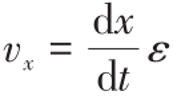
ε is the overall porosity of the carbon fiber fabric. Substituting vx into equation (1) yields equation (2).

Assuming that the resin flow distance at the initial moment is 0, integrating both ends of equation (2) yields equation (3).

Where Sx is the melt flow distance at time t, m; Pi is the resin inlet pressure, Pa; Pf is the flow front pressure, Pa; If vacuum is applied during VARTM molding and the pressure remains unchanged, then in formula (3).

It has a linear relationship with time. By measuring the melt flow distance corresponding to different times through experiments, the permeability Kx can be obtained through the slope of the linear function.
Permeability Test
The permeability test uses a carbon fiber cloth (model C-PLY SP BT300 CT3 50K HS, width 125cm, produced by Chomarat Textiles Industries) with 0°/90° biaxial stitching of T300 grade 50K carbon fiber. The fiber bundles are woven with fine nylon filaments without crossing in the radial and weft directions. The fiber directions of the upper and lower surfaces are perpendicular to each other. The fiber cloth layer thickness is 0.5mm, the surface density is 300g/cm2, and the porosity is 60%. During the permeability test, the fiber cloth was cut to a size of 200mm×300mm, and 4 layers were laid. The fiber stitching structure and laying method are shown in Figure 1.

Fiber Stitching and Laying Method
The high temperature resistant epoxy resin is Huibo ML-8190A, and the curing agent is ML-8190B, which are mixed at a mass ratio of 10:45. The viscosity of epoxy resin at 25°C is 1.4~1.9Pa∙s, and the viscosity after mixing with the curing agent is 300~400mPa∙s. The operating time is 140~220min, and the curing conditions are first kept at 25°C for 24h (or 60°C for 4h) and then kept at 180°C for 3h.
To ensure the accuracy of the experimental test, the mixed solution was placed in a vacuum environment at 25°C for 15min to remove the gas in the resin before the experiment. The VARTM experimental device is shown in Figure 2, and the permeability of the woven structure preform is tested by referring to the axial method and radial method.

Figure 2 Permeability Test Experimental Device
During the experiment, first close the glue inlet, turn on the vacuum pump to evacuate, and keep the pressure of the resin recovery pot below 0.02MPa for 10 minutes to ensure that there is no air leakage in the mold as a whole; then open the glue inlet, and the resin quickly enters the fiber woven cloth under the sealing film under the atmospheric pressure. When the glue fills the guide net, the position of the flow front reaches a uniform position. At this time, start timing and record the time when the resin flow front reaches the scale position, as shown in Table 1.
Table 1 Time when the Resin Flow Front Reaches the Scale Position

The experimental data in Table 1 were linearly fitted, as shown in Figure 3, and the slope of the fitted line was 0.01234±0.00017, and the R2 after fitting was 0.99692. Combined with formula (3), the axial permeability of the large-tow carbon fiber cloth was calculated to be Kx=1.152×10⁻¹¹m2, while the permeability of 12K small-tow carbon fiber fabric under the same conditions is usually not less than 10-10m2, indicating that the resin infiltration of the large-tow carbon fiber cloth is slower and the flow resistance is relatively larger.

Figure 3 Permeability experimental data and fitting
VARTM Simulation Of Automobile Floor
Grid Division and Parameter Setting
For the VARTM of the automobile floor shown in Figure 4, which is a part with complex structures such as protrusions and corners, in order to predict molding defects and determine reasonable glue feeding and air extraction methods to improve production efficiency, this paper uses PAM-RTM software to perform mold filling simulation analysis.
Before simulation, the CAD model was first divided into triangular meshes with the help of Comsol software, with a mesh number of 84390 and a node number of 42440; then the mesh was imported into PAM-RTM to establish an analysis module. According to the design of the product with a thickness of 2 mm and 4 layers of large tow fiber cloth, the mesh model was stretched in the thickness direction, so that the original mesh was stretched from a plane triangular mesh and cut into 4 layers of identical tetrahedral meshes, as shown in Figure 5. Each layer represents a 0°/90° biaxial stitched carbon fiber cloth laid according to the design.
Since each carbon cloth fiber bundle is evenly stitched in the 0° and 90° directions, the permeability of the two mutually perpendicular directions in the same layer can be expressed by the one-dimensional permeability tested in the previous section.
The relevant simulation parameters are shown in Table 2. The characteristics of VARTM are low molding pressure, slow resin infiltration speed, low shear rate, and the epoxy resin before curing is an epoxy-containing oligomer with very low viscosity, so it is regarded as a Newtonian fluid in the simulation process.

Figure 4 Car Floor CAD Model

Figure 5 Model Grid
According to the product size and internal structure characteristics, in order to explore the changes in the mold filling process and filling time, and determine the optimal glue feeding method and exhaust position, this paper adopts three glue feeding schemes for simulation and comparative analysis. Scheme 1 adopts the method of glue feeding from edge 2 and exhausting from edge 4, Scheme 2 adopts the method of glue feeding from edge 3 and exhausting from edge 1, and Scheme 3 adopts the method of glue feeding from the four sides of the part and exhausting from the center.
Table 2 Simulation Parameter Settings

Simulation Results and Analysis
Figure 6 (a) and (b) are the simulation cloud diagrams of the filling time of Scheme 1 and Scheme 2, respectively. The results show that the time for Scheme 1 to completely fill the cavity with resin is as long as 23900s (398.3min), while the maximum operating time of this ML-8190A resin at 25℃ is 220min. When this time is exceeded, the viscosity of the resin will increase rapidly due to the cross-linking reaction, which will directly lead to increased filling resistance, difficulty in fiber bundle infiltration, and inability to fill the cavity, indicating that the design of Scheme 1 is not feasible.
Scheme 2 has a significantly reduced filling time due to the shortened resin flow distance, but it is also as long as 13813s (230.2min). In actual production, this situation may be able to fill the cavity before the resin is completely cured, but the quality of the final filling area will also be poor, and the production efficiency will not be high.
The excessively long filling time indicates that, compared with small tows, the lower permeability of large tow carbon fiber makes the resin flow resistance greater, the fiber bundle infiltration slower, and the filling rate lower under the same pressure drive.

Figure 6 Filling Time Cloud Diagram of Scheme 1 and Scheme 2
In order to solve the problem of low filling efficiency of Scheme 1 and Scheme 2, Scheme 3 chooses to inject glue around the product at the same time, and the exhaust position is in the middle of the product. Figure 7 is the simulated distribution diagram of the filling time. The time for the cavity to be completely filled is reduced to 2480s (41.3min), and the efficiency is greatly improved. The final filling area is also basically located at the geometric center of the product.

Figure 7 Filling Time Cloud Diagram of Scheme 3
Figure 8 is a simulation of the resin filling percentage and flow morphology of Scheme 3 at different times. The results show that when the resin flows through the groove and boss position of the part, the flow front cannot be unified due to the change of flow direction and flow length [Figure 8(a)], and there is a risk of air entrapment at the corners of the lag and protrusion, but as the filling progresses, the flow front gradually returns to consistency [Figure 8(b)].
Figures 8(a) and (b) both show that the resin filling percentage tends to increase gradually from the flow front to the back, indicating that the infiltration of the fiber bundle requires a certain amount of time, and the moment of complete infiltration is slightly behind the moment of the front flow.
Figure 8(c) shows that the flow front basically converges at the exhaust position at the geometric center of the part at the same time, without obvious hysteresis, indicating that the exhaust position is appropriate.

Figure 8 Resin Filling Percentage and Flow Pattern at Different Times
Comparing the simulation results of the above three schemes, Scheme 3 can significantly improve the filling time of large tow carbon fiber VARTM and is a relatively ideal scheme. At the same time, considering that the structure of this product is complex, and the height difference between the convex and concave positions is up to 6cm, the convex parts may be insufficiently infiltrated due to gravity, causing dry spots and bubbles.
In actual production, in order to further ensure the surface and internal quality of the product, Set an overflow port at the air extraction port. The overflow port is above the laminate. After filling, keep the pressure constant and continue to pump air until there is resin flowing out of the air exhaust pipe and there are no obvious bubbles. Stop pumping and lock the air exhaust port. .
Finally, it needs to be pointed out that reliable simulation results must be grid-independent. In order to verify this problem, the number of grids was increased to 160092, and the mold filling time of the two sets of grid calculations was compared under the condition that other conditions remained unchanged. Solution 1 , the difference between scheme 2 and scheme 3 is 3.24%, 2.14% and 1.23% respectively, which meets the requirements of grid independence.
Product Molding and High Temperature Mechanical Properties
Mold Manufacturing and Product Forming
The mold designed and manufactured according to Plan 3 is shown in Figure 9. A runner is designed around the cavity of the upper mold so that the resin can quickly fill the runner after being injected through the injection port, and then fill from the periphery of the cavity to the center. The entire molding time is about 48 minutes, slightly longer than the simulated 41 minutes. Considering factors such as the laying range of carbon fiber cloth in actual production is slightly larger than the product and the increased overflow time, it can be concluded that the actual glue injection time is basically consistent with the simulation results. The trimmed part after curing is shown in Figure 10. The surface of the part is smooth and smooth, with no dry spots or lack of glue.

Figure 9 VARTM Mold

Figure 10 VARTM Parts
Characterization of Fiber Bundle Infiltration Morphology
According to the national standard GB/T 3354-1999 for tensile strength of composite materials, mechanical test specimens were obtained by water cutting at different parts of the product. The cross section showed no obvious bubble entrainment phenomenon. The fiber bundle was obviously gray-black in the length direction, and the fibers in the other direction orthogonal to it were black and tightly arranged.
The super-depth microscope (DVM6 A) was used to observe the morphology of the cut surface. As shown in Figure 11, the cut surface magnified 128 times and 256 times showed that the fiber bundle was well infiltrated, the boundaries of different fiber orientation layers were obvious but well combined, and there were no defects such as pores and dry spots.

Figure 11 Scanning super-depth of field morphology and 3D scanning super-depth of field morphology at different magnifications of the cross section of the workpiece
High-Temperature Mechanical Properties
In the current automobile assembly process, automobile parts usually undergo an electrophoretic drying process, and the drying temperature can reach 120~180℃, and generally lasts for more than half an hour, which is a challenge for carbon fiber parts. Therefore, conducting high-temperature performance research on carbon fiber reinforced floors is of great significance for evaluating whether composite materials can pass the electrophoretic drying process.
Figure 12 shows the tensile specimen of the bonded aluminum reinforcement sheet and the Shimadzu high-temperature tensile tester (Shimadzu AG-XPlus), which truly simulates the environment of the material in the drying process. The specimen and the fixture are kept warm in a closed environmental box at a set temperature for 30 minutes before starting the tensile test.
Figure 13 shows the average tensile strength and modulus of the sample at four temperatures: 25°C, 80°C, 130°C and 180°C. It can be seen that the tensile modulus decreases from 55.23 GPa at 25°C to 34.47 GPa at 180°C, and changes significantly with temperature, while the tensile strength does not decrease significantly. The tensile strength at 180°C is 472.24 MPa, which still maintains good tensile resistance.

Figure 12 Tensile Specimen and High Temperature Tensile Testing Machine

Figure 13 Average Tensile Strength and Tensile Modulus at Different Temperatures
Figures 14 and 15 are electron microscope photos of the tensile fracture surface of the sample at 25℃ and 180℃. At 25℃, there is more resin adhesion on the fiber surface, indicating that the sizing agent on the carbon fiber surface improves the interfacial shear strength and plays an effective role in transferring load.
However, at 180℃, the carbon fiber surface is relatively smooth and less resin is adhered, indicating that the interfacial shear strength between the fiber and the matrix is weakened and the bonding force is reduced. This may be caused by the following reasons:
First, the sizing agent on the fiber surface has been decomposed or partially decomposed at a high temperature of 180℃, and the chemical structure formed by the active functional groups in the matrix and the sizing agent has been destroyed;
Second, the resin may have softened to a certain extent when it is close to the glass transition temperature, resulting in a decrease in the mechanical meshing effect between the resin and the groove on the fiber surface, which ultimately leads to a significant decrease in the tensile modulus of the sample.
Therefore, in order to improve the mechanical properties of resin-based composite materials at high temperatures, in addition to using high-temperature resistant resins, the heat resistance of the sizing agent is also an important influencing factor.

Figure 14 SEM Image of Tensile Fracture Surface at 25℃

Figure 15 SEM Photo of Tensile Section at 180℃
The above tensile test results show that the composite material still has a good ability to resist external forces without being damaged at high temperatures.
At the same time, the automobile floor will inevitably generate assembly stress inside the assembly state. Whether the composite material will undergo obvious creep deformation under the combined action of assembly stress and drying high temperature is another key factor in determining whether the composite material can pass the electrophoresis drying process.
In view of this, the dynamic mechanical analyzer (Q800) was used to experimentally study the strain change and strain recovery of the composite material sample under different stresses and temperatures. As shown in Figure 16, under the conditions of applying two stress loads of 20MPa and 40MPa for 30min, the maximum strain of the material gradually increases with the increase of temperature. The maximum strains of the two stresses at 180℃ for 1800s are 0.84% and 1.58%, respectively, indicating that temperature has a significant effect on the strain of the sample.
However, under the same 180°C condition, when the two stresses are released for 1800s, the strains can be recovered to 0.1025% and 0.2689%, respectively, both of which are at a relatively low level, indicating that the sample still has good creep resistance at a high temperature of 180°C.

Figure 16 Strain-Time Curves at Different Temperatures
Conclusion
This paper studies the industrial application needs and existing problems of low-cost large-tow carbon fiber in the automotive field, which is of great significance for guiding whether composite materials can pass the electrophoretic drying process of traditional automobiles. The main work and conclusions are as follows.
Based on Darcy’s law, the permeability calculation formula was derived, and the permeability of 0°/90° biaxial stitched large-tow carbon fiber cloth (50k) was tested and calculated using the self-built VARTM process equipment. The results show that under the same conditions, the permeability of large-tow carbon fiber fabric is significantly lower than that of small-tow.
The VARTM simulation optimization study of automobile floor was carried out, and the optimal glue feeding method and air extraction port position were determined. Based on this, the molding mold was designed and manufactured, and a sample with good surface quality was trial-produced. Super-depth of field microscopy observation showed that the fiber bundle and interlayer infiltration were good, without defects such as dry spots and air inclusions, indicating that large-tow carbon fiber cloth can be liquid-molded into products with good quality under reasonable mold design and process conditions.
The high-temperature online tensile test results show that temperature has a significant effect on the tensile modulus of the high-temperature resistant EP-based CF composite material, but has little effect on the tensile strength, indicating that the material still has a good ability to resist external forces without being damaged at high temperatures.
The high-temperature strain test shows that temperature has a significant effect on the strain of the material, but when the two stresses of 20MPa and 40MPa are released for 1800s at 180℃, the strain can be restored to 0.1025% and 0.2689% respectively, both at a low level, indicating that the material still has good creep resistance at high temperatures.
IF COMPOSITE MATERIAL IS NEEDED, PLEASE GET A HOLD OF US IN WHICHEVER WAY IS MOST CONVENIENT. WE WILL REPLY YOU WITHIN 24 HOURS.

